
Introduction to Volkswagen (VW)
Volkswagen is also known as Volkswagen, also known as is among the largest car manufacturers worldwide. Volkswagen was established in Germany and was initially focused on producing affordable automobiles for people. In the course of time, Volkswagen expanded far beyond one car manufacturer and grew into a global automobile group that has operations across a variety of nations.
Presently, Volkswagen Group produces millions of vehicles each year and is the owner of several renowned automobile brands. Due to its influence and size the majority of people naturally are prompted to ask a straight forward but vital query: who owns VW Many people inquire questions about Volkswagen ownership for a variety of reasons. Investors want to know who is in charge of the Volkswagen company. Consumers want to be aware if VW is reliable and stable. Researchers and journalists want to know the truth due to the fact that Volkswagen’s ownership structure not straightforward. Contrary to companies owned by one individual, Volkswagen has shared ownership and strong controlling mechanisms.
What Does Owning a Company Really Mean?
If someone owns a portion of a business this usually means they hold shares. Shares represent a piece of ownership. If a company owns numerous shares, ownership will be divided among the various shareholdersShares aren’t all identical. Some shares offer the right to vote that allow shareholders to cast votes on crucial things like the company’s leadership and strategy. Other shares generally have financial benefits, for instance dividends. In big companies such as Volkswagen, voting rights are more significant than the total number of shares in relation to the actual power.
Is Volkswagen a Public or Private Company?
Volkswagen as a Public Company. Volkswagen is an privately traded corporation. Its shares are traded on the stock exchange, mostly in Germany. It means that anyone can purchase Volkswagen shares on the stock exchange.
Why Public Does Not Mean Fully Free-Controlled. While the public may purchase shares, it doesn’t mean that the public is the sole control of the business. Control comes to shareholders who hold the voting rights not any shares.
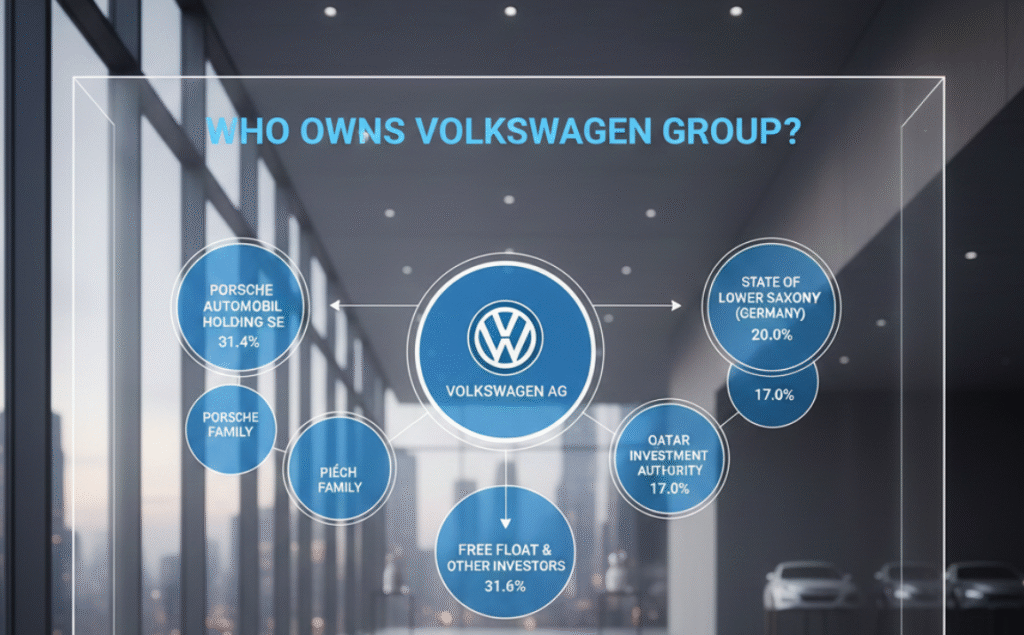
Porsche Automobil Holding SE
It is the top and largest shareholder of Volkswagen is Porsche Automobil Holding SE which is also known as Porsche SE. It holds over 50 percent the voting power of Volkswagen which gives it a significant control over the company.
Germany: The State of Lower Saxony
It is believed that the German state Lower Saxony owns about 20 percent in Volkswagen’s vote rights. This gives the German government a lot of influence, particularly in the decisions that affect employment and factories.
Public and Institutional Investors
All the shares remaining are held by:
- Investment funds
- Banks
- Pension funds
- Individual investors
These shareholders profit financially, however they have a limited say in the matter.
Porsche SE Explained in Simple Language
What Porsche SE Is. Porsche SE is not an automobile company. It doesn’t make cars. It is an holding corporation founded primarily to own shares of Volkswagen Group.
How Porsche SE Controls VW. Since Porsche SE owns the majority of voting shares It is the sole authority for important decisions at Volkswagen including the appointment of leaders and the long-term strategy.
Why Many People Mix Them Up
They are often confused by these two companies due to
- Volkswagen Group owns Porsche AG
- Porsche SE controls Volkswagen Group
The circle is legally legal, and well designed.
Their Long-Term Role in VW
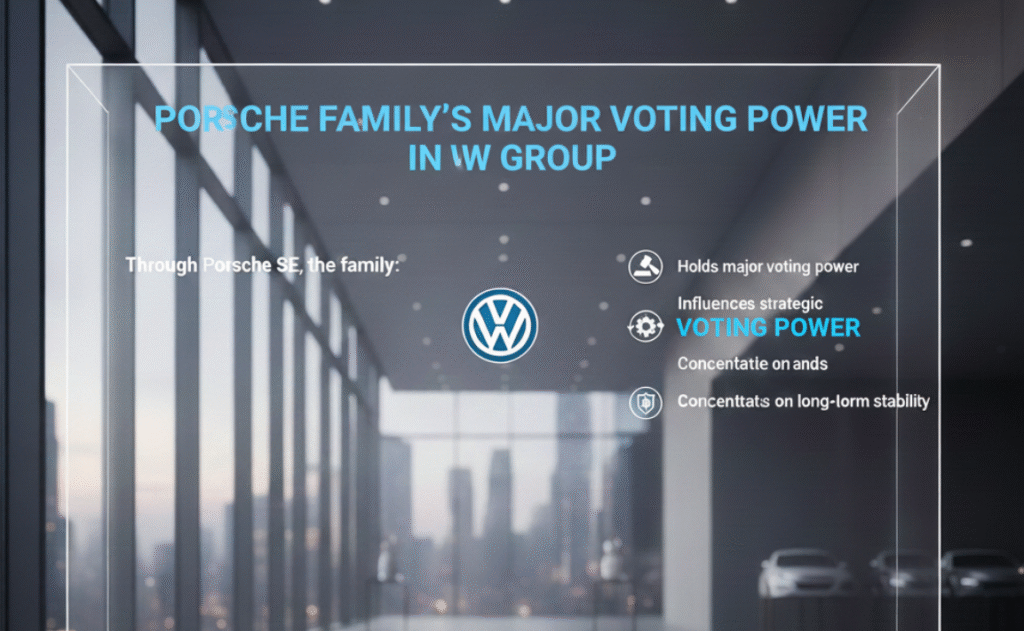
Through Porsche SE, the family:
- Holds major voting power
- Influences strategic decision-making
- Concentrates on long-term stability
They are regarded as to be the main controlling factor behind VW
What is the Volkswagen Law
It is the Volkswagen Law is a specific law in Germany which only applies on the Volkswagen Group. The law was enacted to prevent any shareholder from having full control over the business, even if they hold an extensive amount of shares. This law grants an individual from the German government in Lower Saxony a constant level of influence over the Volkswagen decision making process.
In these laws, no one may be granted greater than 20 percent of voting rights regardless of whether they hold more shares. This law guarantees that the power of Volkswagen is always distributed and equal.
Why the Volkswagen Law Exists
It is the Volkswagen Law exists to protect the long-term interests of regional and national interest. Volkswagen is among the largest employers in Germany and plays a significant part in the economy of Germany. This is why the government sought to ensure that the firm was not taken over or controlled by foreign investors who could be focused on short-term profit. The law assists in protecting:
- Employees are protected from massive layoffs or sudden restructuring
- Local jobs are particularly prevalent located in Lower Saxony where VW has significant manufacturing facilities
- Stability of a company for the long-term by promoting responsible and long-lasting decisions
In simple words it is that it is said that the Volkswagen Law acts like a security lock that keeps the firm in good shape and safeguards the people who are connected to it.
Volkswagen Ownership Structure
Ordinary shares are the most powerful type of shares issued by Volkswagen. These shares come with full voting rights, which means shareholders can actively participate in the company’s most important decisions. Owners of ordinary shares are allowed to vote on matters such as:
- Appointing or approving members of the management and supervisory boards
- Making major business and investment decisions
- Influencing the long-term strategy and future direction of the company
Because Porsche Automobil Holding SE owns the majority of Volkswagen’s ordinary shares, it holds the strongest voting power. This is the main reason why Porsche SE has control over Volkswagen, even though it does not own all of the company’s total shares.
Preference Shares
Preference shares work differently from ordinary shares. These shares are designed mainly for investors who are interested in financial returns rather than control. Preference shares usually offer higher dividend payments, which means shareholders can earn more money when the company performs well. However, preference shares do not include voting rights. This means investors who hold these shares benefit financially but cannot influence company decisions, leadership choices, or strategic direction. They are essentially silent partners in the business.
Why Voting Power Matters Most
At Volkswagen, real control is determined by voting power, not by total investment value alone. Voting rights decide who can guide the company’s future, select leaders, and approve major strategic moves. An investor with strong voting power can shape Volkswagen’s long-term goals, influence management decisions, and protect their interests—even if they do not own the majority of all shares. This explains why Porsche Automobil Holding SE plays the most influential role in Volkswagen, making voting rights the most important factor in understanding the company’s ownership structure
Volkswagen Group is not just one car brand. It is a large global automobile group that owns many popular and well-known brands across different segments of the market. These brands serve customers with different needs, ranging from affordable daily cars to luxury vehicles, high-performance sports cars, and commercial trucks.
Mass-Market Brands
These brands focus on producing reliable and affordable vehicles for everyday use. They are designed for regular customers who want comfort, safety, and value for money.
- Volkswagen The core and primary brand of the group. Volkswagen offers cars for the general public and represents the foundation of the company.
- Škoda Known for its reliability, practicality, and strong value, Škoda is popular among families and budget-conscious buyers.
- SEAT A stylish and youthful brand that mainly focuses on the European market, offering sporty designs and modern features.
Luxury and Performance Brands
These brands target the premium and high-performance market, focusing on advanced engineering, luxury, and powerful performance.
Bugatti Produces hypercars that push the limits of speed, technology, and engineering excellence.
Audi A premium brand known for advanced technology, innovation, and high-quality vehicles.
Porsche Famous for luxury and high-performance sports cars and SUVs, combining speed with everyday usability.
Lamborghini An exotic supercar brand recognized for extreme performance, bold design, and powerful engines.
Bentley A luxury brand that focuses on comfort, craftsmanship, and elegance.
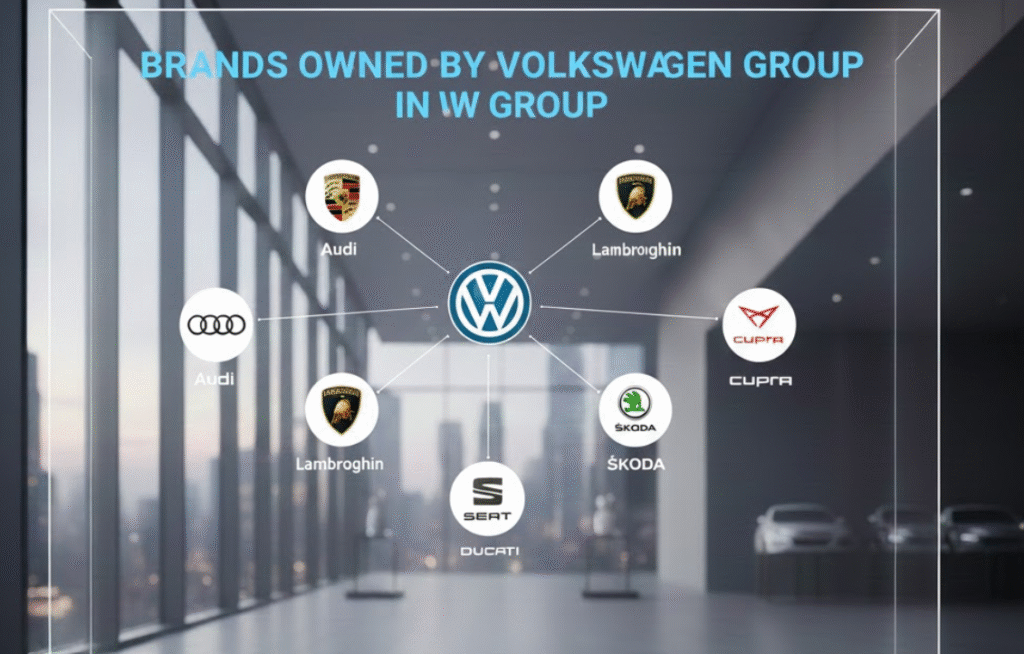
The wide range of brands is what makes Volkswagen among the largest and most diverse automotive brands around the globe.
Trucks and Commercial VehiclesTrucks and Commercial Vehicles
Volkswagen Group is also a major player in commercial transportation, serving businesses and industries around the world.
- MAN Manufactures trucks and buses for transportation and logistics.
- Scania Specializes in heavy-duty trucks and advanced transport solutions.
- Volkswagen Commercial Vehicles Produces vans and business vehicles for commercial and professional use.
Who Controls Decisions at Volkswagen?
Volkswagen operates under a structured governance system that separates daily management from long-term oversight. This system ensures balance, transparency, and responsible leadershipVolkswagen operates under a structured governance system that separates daily management from long-term oversight. This system ensures balance, transparency, and responsible leadership.
Management Board
Management Board
The Management Board is responsible for the day-to-day operations of Volkswagen Group. Its duties include:
- Vehicle production
- Sales and marketing
- Financial management
- Technology and innovation development
The Management Board focuses on executing company strategy and managing everyday business activities. the strategy of the business and overseeing the company’s operations.
Supervisory Board

Supervisory Board
The Supervisory Board oversees the Management Board and plays a key role in major decision-making. Its responsibilities include:
- Approving major strategic decisions
- Appointing and supervising top executives
- Ensuring responsible and ethical management
The Supervisory Board includes representatives from:
Role of Employees and Unions
Volkswagen is unique because employees have strong representation on the Supervisory Board. Labor unions play an active role in the decision-making process. This system helps:
- Protect employees’ rights
- Ensure job security
- Promote long-term stability
Such strong worker involvement is rare among large global corporations.
Common Myths About VW Ownership
There are many misunderstandings about who owns VW, mainly because Volkswagen has a unique ownership and control structure. Below are the most common myths, explained clearly
Volkswagen is controlled by Porsche Automobil Holding SE, influenced by the German state of Lower Saxony, and supported by public and institutional investors. This balanced structure helps ensure long-term stability, employee protection, and responsible corporate governance..
Is VW Owned by the German Government?
No, Volkswagen is not fully owned by the German government. While the state of Lower Saxony owns a significant stake and has special voting rights, it does not control the company alone. Ownership is shared between Porsche SE, Lower Saxony, and public investors.
Is VW Owned by a Billionaire?
No single billionaire owns Volkswagen. Control of the company comes from Porsche Automobil Holding SE, along with government influence and public shareholding—not from an individual person.
Why Volkswagen Ownership Matters
For Customers
Stable ownership allows Volkswagen to:
- Make sure you invest in long-term innovations
- Maintain high standards of quality
- Provide long-term support and service
This increases confidence with the company’s reputation.
For Investors
Control and ownership are clear, which reduces the risk of uncertainty. Investors are aware of who makes decision-making and how the business is following a long-term plan of action instead of focusing on short-term gains.
Legal and ownership protections that are strong protect:
For Employees
- Security of employment
- Representation of the worker
- Stable working conditions
Can Volkswagen Ownership Change in the Future?
Who Owns VW Today and Why Change Is Unlikely
When we talk about who is the owner of VW It is normal to be curious about whether Volkswagen’s ownership may change in the near future. Although Volkswagen is an openly traded company and its shares are purchased and sold daily, major changes in the ownership of VW are not likely in the in the near time. This is due to the fact that control of the business is protected through a solid ownership structure as well as special voting rights.
Possibility of Minor Ownership Changes
Minor ownership changes can take place anytime. Institutional and public investors can expand or decrease their holdings depending on market conditions. These changes impact the shareholders list, however they they do not alter who controls VW in terms of actual control as the voting power is still with the controlling shareholders.
Why Core Control Is Expected to Remain the Same
The primary reason why stability in ownership is due to the fact that Porsche Automobil Holding SE is the sole owner in Volkswagen’s vote rights. Additionally to that, it is the German states that is located in Lower Saxony holds a secured voting stake in accordance with the Volkswagen Law. This is a combination that creates hostile takeovers and abrupt ownership changes extremely difficult.
Future Developments That Could Influence Ownership
In the longer term investment in the electric vehicle, technological advancements or global partnerships could modify shareholding percentages. But, despite these changes, who owns VW will remain the same at the core.
Final Outlook on Who Owns VW in the Future
In the future, who owns vw Volkswagen’s management model was designed to ensure long-term stability. It is likely the case that Porsche SE will continue to run Volkswagen, Lower Saxony will remain in control while public investors control all the shares. This structure is balanced to ensure the stability, continuity and strategic coherence for the business.
Final Summary: Who Owns VW
The question is, who owns VW? It is the Volkswagen Group is mainly owned through Porsche Automobil Holding SE which is part of the strong Porsche-Piech clan. The company is the largest holder votes of the Volkswagen Group and gives the group a significant influence over major business decisions. However that it is the German government in Lower Saxony owns a large portion of voting rights, which allows the state to influence key decisions, and safeguard jobs and regional interests.
All the remaining shares of VW are held by institutional and public investors from all over the world. The unique, well-balanced and balanced ownership structure – which combines the control of family members, state oversight along with public-private investment–explains who is the owner of VW and how VW remains among the most reliable, stable and powerful car companies worldwide..
FAQs
1. What is the main individual or company who owns vw?
The company is also the main shareholder controlling the company in the Volkswagen Group. Porsche SE does not build automobiles on its own; instead, it’s a holding corporation that holds all of the Volkswagen Group’s votes. The voting power lets Porsche SE as a whole, and also members of the Porsche-Piech family to influence important decisions like leadership selections along with long-term strategy and corporate direction.
2.Is Volkswagen controlled by Porsche cars?
There is no need to worry, Volkswagen is not controlled by Porsche automobiles. This is a common misconception. Porsche AG is the manufacturer of Porsche vehicles. It is actually part of Volkswagen Group. However, Porsche SE is a separate holding firm which is the sole control of Volkswagen. When explaining who controls VW the company, it is crucial to know the fact that Porsche SE controls VW and in contrast to Porsche AG.
3.Can normal people buy VW shares?
Anyone are able to purchase Volkswagen shares. Because Volkswagen is an publicly traded corporation it has shares listed on the major stock exchanges, such as those on the German exchanges. Individual investors, in addition to large institutions can also purchase shares in VW. However, holding shares doesn’t necessarily mean you control the company. This is the reason why although a lot of individuals have VW shareholdings, the control of VW remains in Porsche SE and key voting shareholders.
4.Does Germany entirely control Volkswagen? Does it own Volkswagen 100%?
It is not true that Germany is not have the right to own Volkswagen 100 percent. When people inquire who is the person who owns VW the majority of them think that the German government is the sole owner. However, in fact it is it is the German government of Lower Saxony owns just the part of Volkswagen shares and has significant votes. This enables the state to influence crucial decisions, particularly those relating to factories and jobs, without owning 100% of the business.
5.What person is the one with greatest influence on VW in the present?
The biggest influence on Volkswagen is held by Porsche Automobil Holding SE. Since it has the largest share votes, Porsche SE has the most influence over how the business is run. This is the main reason for why, when asked who owns Volkswagen experts cite Porsche SE as the most effective control unit in Volkswagen. Volkswagen Group.